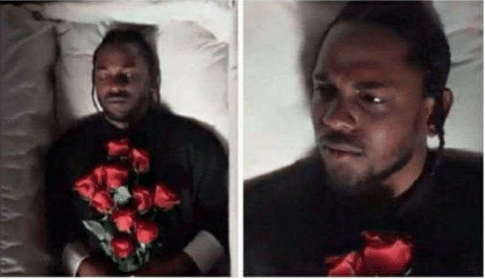
My current college housemate often weirdly feels the need to talk to me about her dead uncle Trevor. The way she speaks of him in all honesty, has a higher tone of joy and relief than it brings out any sorrow or grief that she might feel. Whenever my housemate offers to make me a cup of coffee as she makes her own, I jokingly always initially hit her with a “nah, I still want to live!”, and throw in one of her many jokes which suggest that she was overly keen to get rid of Uncle Trevor so much that one day she made him a cup of coffee which she believes might have been the one that killed him. Generally, the African culture does not tolerate any ridicule towards the deceased and our memories of them ought to be dressed in flowers and warm hugs to depict quite a merry life when they might have brought the darkest and most grey clouds that most likely left us with scars. I have to admit that I have, with everything in me, tried to fight the urge to analyze the other side of people’s legacies, however, there is also great complusion to do so as I too wonder what the eulogies at my funeral will sound like.
Due to very little emotional strength and genuine fear, I do not attend many funerals myself but based on the few that I did and the many others I did not, it may be safe to say that you barely run into a demeaning or negative eulogy when testimonials of the deceased are given. In my Shona culture particularly, the term “wafa wanaka” was coined to refer to situations where the deceased are cleansed of their ills and misgivings. It would not be a surprise to attend a serial killer or a rapist’s funeral and still hear glorious chants about how much they cared about humanity and probably how they advocated for human rights when in actual fact they had a criminal record or a list of people whose human rights they violated, that is as long as the cast list for Leonardo DiCaprio’s “The Wolf Of Wallstreet”.
There are a few truths that society is not really ready to hear. One such truth that people often ignore is how much of an insult it is to those who got to witness and experience the bitter end of any interaction they had with the deceased. Just as how abusive men often come off as everyone else’s sweetheart, only their wives and children know them for the wolf in sheep clothing that they really are. Understandably so, the last thing a person has with them when they pass on is probably the memories they had with those they surrounded themselves with and tarnishing those memories would probably not be a very humane thing to do but is it not insensitive to save someone’s legacy while probably leaving their victims to nurse the trauma and wounds left by the deceased, to themselves?
From my understanding, the use of eulogies is to highlight a life that, according to each and every differing society, was noteworthy and fit to serve as one that is exemplary. Not to “pay respect”. What respect do we want to give a dead body that it earned beyond what the living body could accomplish. This concept of “paying respect” is also very skewed as it perpetuates giving people their roses when they are not with us anymore. Why can we not give them their praises and/or call them out for wrong doing while they are alive. Rather, the more respectful thing to do would be to address their ills or their victims and if apologies have to be given on their behalf, then they should.
If the purpose of testimonies is to urge others to do better, then real identities should be given so that standards within societies of what is right and what is wrong can be maintained. The world has seen dictators being glorified upon their death when there are nations wailing over the damage they left and unpleasant impact caused by the same glorified people. Essentially this begs us to do better, be kind, be compassionate and to love. Take time and think of what those around you will have to say about you when your time comes. What will your eulogy sound like?
REMEMBER LIVE…LOVE.
 You have a role too
I thoroughly enjoyed reading this. Thank you!
LikeLike
I couldn’t agree more with your views. A certain boy was killed after continuously bullying his classmates. I don’t condone the killing, but his family said he was such a wonderful person and a church goer. I’d honestly rather not say anything at a bad person’s funeral than lie. I only say what I mean.
LikeLiked by 1 person